

Your daily commute isn't just time-consuming-it's expensive. Between stop-and-go traffic on I-95, Route 9, and Route 2, fuel efficiency, traction, and long-term ownership costs matter more than ever. For Connecticut drivers shopping compact hybrid SUVs, two names come up again and again: the 2025 Kia Sportage Hybrid and the 2025 Toyota RAV4 Hybrid.
Hybrid Commute War: 2025 Kia Sportage Hybrid vs 2025 Toyota RAV4 Hybrid for Connecticut Stop and Go Traffic
This comparison focuses on what actually impacts your weekday drive: fuel economy, winter traction, cargo space, and warranty coverage.
Fuel economy and real-world range
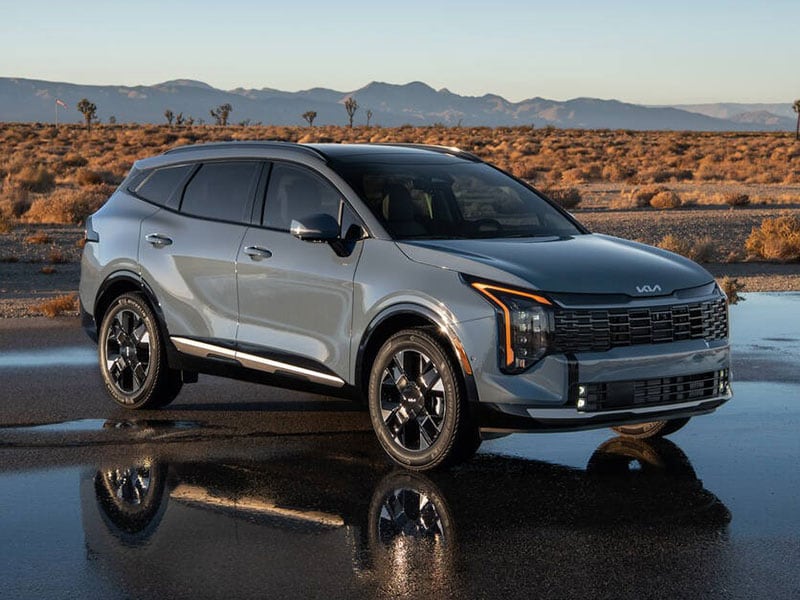
The 2025 Kia Sportage Hybrid delivers standout efficiency. In front-wheel-drive form, EPA estimates come in at 42 mpg city, 44 mpg highway, and 43 mpg combined. Even when equipped with available all-wheel drive, the Sportage Hybrid still manages an impressive 38 mpg combined. For drivers crawling through traffic lights and highway bottlenecks, those numbers add up quickly at the pump.
The 2025 Toyota RAV4 Hybrid is no slouch either. It earns an EPA-estimated 38 mpg combined and includes all-wheel drive as standard equipment by using an electric motor to power the rear axle. This system engages automatically when traction is needed, without a traditional driveshaft.
Fuel economy takeaway: If maximizing MPG is your top priority and front-wheel drive works for your lifestyle, the Sportage Hybrid has the edge. If you want standard AWD with strong efficiency, the RAV4 Hybrid delivers consistency in the high-30s.

Winter traction and confidence
Connecticut winters are unpredictable, and traction matters. The RAV4 Hybrid includes Toyota's Electronic On-Demand All-Wheel Drive on every trim. When front wheels slip, the rear electric motor instantly adds grip, which can be reassuring on icy on-ramps or snow-covered side streets.
The Sportage Hybrid gives buyers a choice. Front-wheel drive maximizes efficiency, while available all-wheel drive adds confidence for winter driving. This flexibility lets drivers decide whether fuel savings or traction takes priority.
Cargo space and daily usability
When it comes to hauling groceries, sports gear, pets, or strollers, numbers matter. Kia lists the Sportage Hybrid with approximately 39.5 cubic feet of cargo space behind the second row, expanding to about 73.7 cubic feet with the rear seats folded. Those figures are among the largest in the compact hybrid SUV segment.
The Toyota RAV4 Hybrid offers roughly 37.5 cubic feet of cargo space behind the second row. That's still plenty for everyday needs, but Kia wins on sheer volume.
Warranty coverage and long-term ownership
- Kia Sportage Hybrid: Kia includes a 10-year/100,000-mile limited powertrain warranty for the original owner, along with 5-year/60,000-mile basic coverage. For long-term owners, this can significantly reduce repair anxiety.
- Toyota RAV4 Hybrid: Toyota typically provides 3-year/36,000-mile basic coverage and 5-year/60,000-mile powertrain coverage, with strong brand reputation and resale value.
Which hybrid SUV fits your commute?
Fuel-focused commuters: The Sportage Hybrid FWD stands out with its higher combined MPG.
Drivers who want AWD standard: The RAV4 Hybrid delivers all-wheel drive on every trim without sacrificing efficiency.
Busy families and gear haulers: The Sportage Hybrid's larger cargo area offers more flexibility.
Bottom line
The 2025 Kia Sportage Hybrid leans into efficiency, interior space, and an industry-leading warranty. The 2025 Toyota RAV4 Hybrid emphasizes standard all-wheel drive, strong resale value, and long-established reliability. Both are excellent choices for Connecticut commuters and both use far less fuel than traditional gas-only compact SUVs.